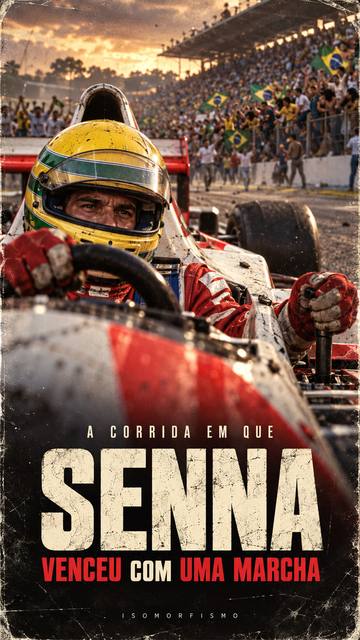
After losing the 1989 title to Prost, Senna met his rival again at Suzuka the following year, with revenge in the air.
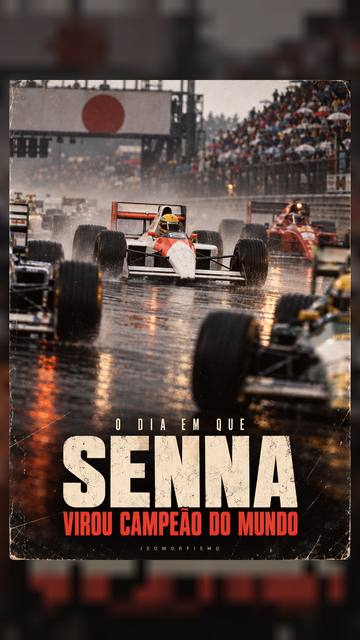
Suzuka’s first corner became the end point of a rivalry that had been building for a year. Ayrton Senna and Alain Prost arrived side by side, each in a McLaren. The collision put both cars out of the race. For Senna, though, it also settled the 1990 championship before he had completed a single lap.
What remained from 1989
A year earlier, the two teammates had clashed at Suzuka in a decision that left its mark. Prost led the championship by 16 points. To have any chance of defending the title, Senna had to win the final two races.
On lap 47 of 53, Prost was leading. Senna tried to pass on the inside of the chicane, a sequence of turns. The cars collided. Prost retired, but Senna managed to rejoin with help from the marshals. After cutting through the chicane and changing his front wing in the pits, he caught Alessandro Nannini and crossed the finish line first.
The victory did not stand. Senna was disqualified for gaining an advantage by cutting the chicane. The decision handed the win to Nannini and the title to Prost. The collision became more than a retirement: it left a dispute between two teammates, both chasing the championship, unresolved for the following year.
The first-corner collision
In 1990, Prost was driving for Ferrari. Senna remained with McLaren. They returned to Suzuka with the championship at stake. At the start, Prost was ahead. Senna went down the inside at the first corner without lifting. The McLaren hit the Ferrari, and both cars stopped, out of the race.
This time, there was no chicane to cut and no finish line to cross. Neither driver completed the first lap. Senna still won his second world championship. The revenge was complete at the moment of impact: Prost retired, and the title was decided in Senna’s favor.
An answer that divided opinion
After the race, Senna said he would attack the first corner if he lost the lead at the start, whatever the outcome. His statement gave the collision a deliberate meaning. It was more than the end of a move; it was Senna’s public response to what had happened at Suzuka the year before.
The sequence began with an overtaking attempt in 1989, continued with Senna’s disqualification and Prost’s title, and ended a year later with both cars out and Senna champion. The rivalry brought no reconciliation. It produced a decisive championship result and a question that remains: was the revenge fair? To some, it was a demand for redress after a decision cost him the chance to fight for the title. To others, the collision cannot be separated from the choice to attack without backing off. At Suzuka, Senna secured the championship. The cost was leaving the fairness of his response open to debate.